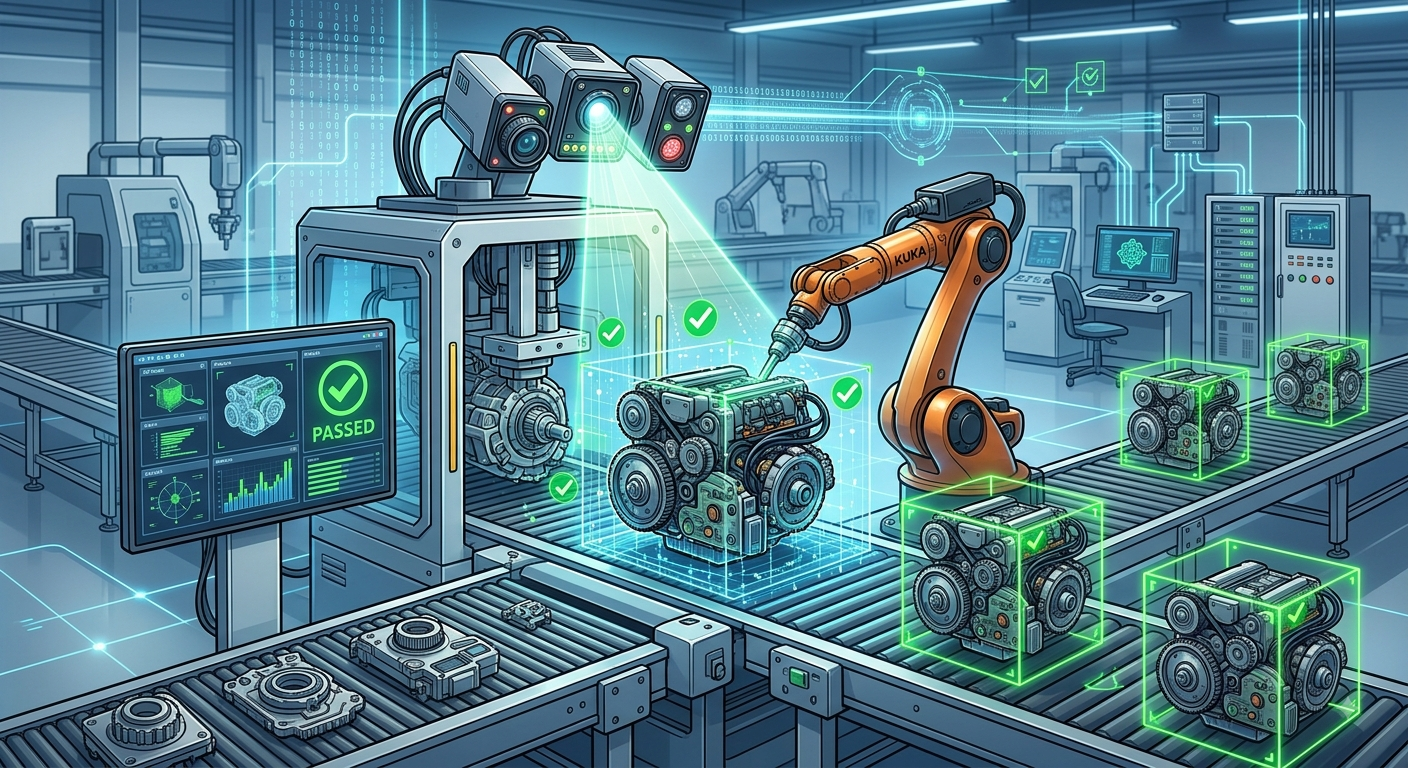
Manufacturing has evolved significantly over the past decade. Production lines are becoming faster, product variants are increasing, and customers expect near-perfect quality. To meet these expectations, manufacturers need inspection systems that are not only accurate but also capable of keeping pace with modern production speeds.
This is where computer vision has become a critical technology. Instead of relying solely on manual inspection or basic rule-based systems, manufacturers are using AI-powered computer vision to verify assemblies, detect defects, and ensure every product leaving the production line meets quality standards.
But what exactly is computer vision, and how does it enable modern assembly verification?
What Is Computer Vision?
Computer vision is a branch of artificial intelligence that enables machines to "see" and interpret images in much the same way humans do. Using industrial cameras and AI models, a computer vision system captures images of products and analyzes them to identify whether each assembly meets predefined quality standards.
Unlike traditional vision systems that rely on fixed rules, AI-powered computer vision learns from thousands of images of both good and defective products. This allows it to recognize subtle variations that would otherwise require complex programming or could even be missed during manual inspection.
For manufacturers, this means inspections become faster, more accurate, and easier to adapt as products evolve.
How Computer Vision Fits into Assembly Verification
Assembly verification is the process of confirming that every product has been assembled correctly before moving to the next stage of production or shipment.
A computer vision system performs this verification automatically.
As products move along the production line, strategically positioned cameras capture high-resolution images from one or multiple angles. These images are immediately analyzed by AI models trained to recognize the correct assembly.
The system compares each product against expected standards and determines whether it passes inspection or requires attention.
Because this process happens in real time, manufacturers receive immediate feedback without slowing production.
What Can Computer Vision Detect?
Modern assembly verification systems can identify a wide range of defects that commonly occur during manufacturing.
These include:
Missing components
Incorrect part orientation
Wrong component placement
Missing screws, clips, or fasteners
Loose connectors
Incorrect cable routing
Missing labels or barcodes
Incomplete assemblies
Cosmetic issues affecting product quality
Rather than inspecting random samples, computer vision evaluates every product passing through the production line, significantly reducing the risk of defective products reaching customers.
Why AI Makes Computer Vision Smarter
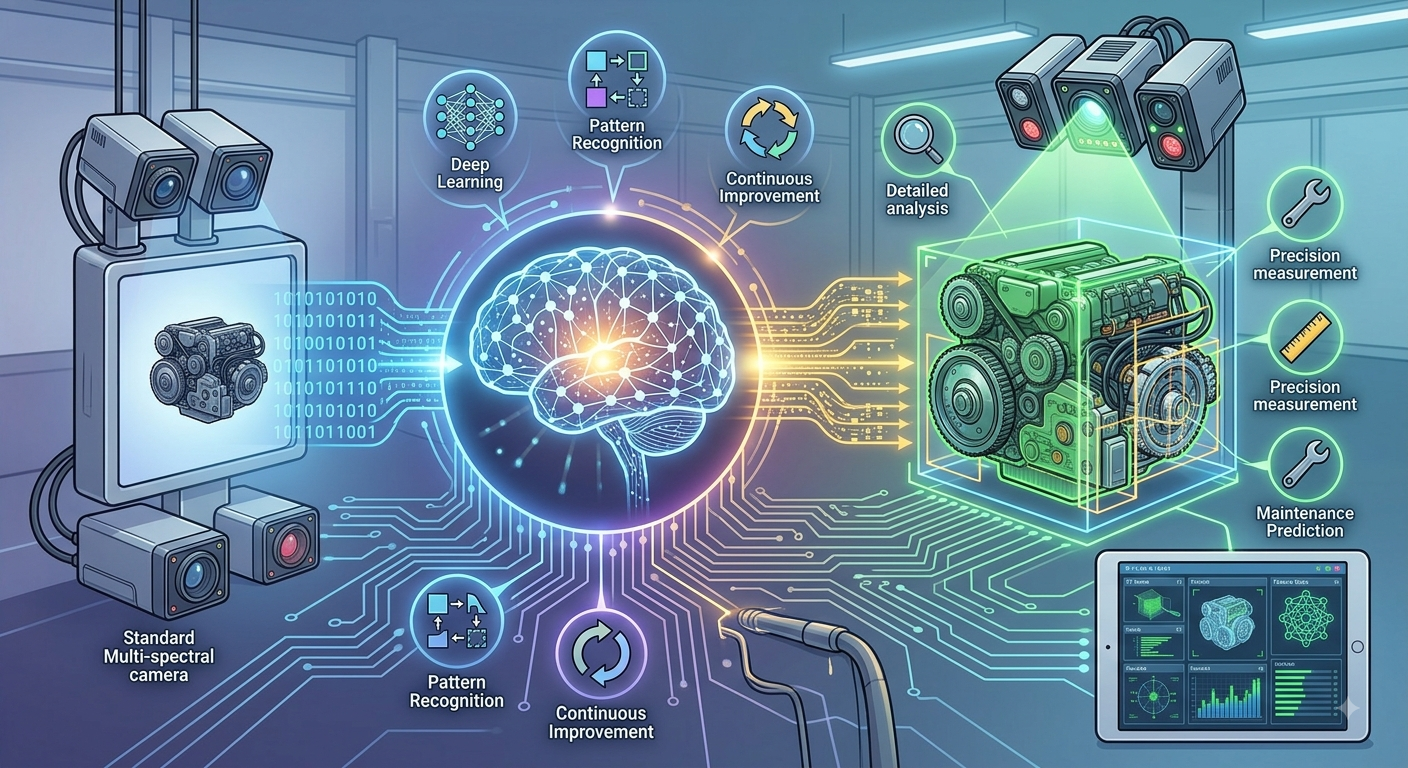
Earlier machine vision systems relied on predefined inspection rules. Every inspection condition had to be programmed manually, making these systems difficult to maintain whenever products changed.
AI has transformed this approach.
Instead of defining every possible defect manually, AI models learn from production data. Engineers train the system using images of correctly assembled products as well as common defects. Over time, the model becomes capable of recognizing increasingly subtle variations with remarkable consistency.
When new product variants are introduced, manufacturers can retrain the model instead of rebuilding the inspection system from scratch.
This flexibility is one of the biggest reasons manufacturers are replacing traditional rule-based inspection with AI-powered computer vision.
Real-Time Decisions Improve Manufacturing Quality
One of the greatest advantages of computer vision is speed.
Inspection results are available almost instantly after an image is captured. If a defect is detected, the production system can automatically reject the product, alert operators, or trigger corrective actions before additional defective units are produced.
This reduces rework, minimizes scrap, and prevents quality issues from progressing further down the production line.
Instead of discovering problems during final quality checks, manufacturers identify defects exactly where they occur.
Beyond Inspection: Turning Images into Production Insights
Computer vision doesn't just identify defective products-it also generates valuable production data.
Every inspection creates digital records that help manufacturers understand why defects occur, when they occur, and where improvements are needed.
Over time, this information reveals trends that may otherwise remain hidden.
For example, manufacturers can identify whether assembly errors increase during certain shifts, after equipment maintenance, or when specific suppliers provide components. These insights enable proactive process improvements rather than reactive quality control.
This combination of inspection and analytics makes computer vision an important part of Industry 4.0 manufacturing.
Where Computer Vision Is Used
Assembly verification powered by computer vision is now common across multiple industries.
Automotive manufacturers verify clips, fasteners, wiring harnesses, connectors, and dashboard assemblies before vehicles move to the next station.
Electronics manufacturers inspect PCB assemblies, connectors, displays, and component placement with high precision.
Consumer goods companies verify packaging components, labels, caps, seals, and accessories before shipment.
Medical device manufacturers use computer vision to confirm correct assembly of precision components while maintaining strict regulatory quality standards.
Although products differ across industries, the objective remains the same: verify every assembly accurately and consistently.
Choosing the Right Assembly Verification Solution
Not every computer vision system delivers the same results.
Manufacturers should look for solutions that integrate seamlessly with existing production lines, support multiple camera configurations, adapt to new product variants, and provide actionable inspection analytics alongside defect detection.
Equally important is selecting a platform that can scale with future manufacturing requirements rather than solving only today's inspection challenges.
At Orama Solutions, our Assembly Verification platform combines advanced computer vision with industrial AI to inspect products in real time, detect assembly errors, and provide manufacturers with the visibility needed to improve quality across the entire production process.
The Future of Assembly Verification
As manufacturing becomes increasingly automated, inspection must evolve alongside it.
Computer vision enables manufacturers to inspect every product, reduce quality variation, improve traceability, and respond instantly to production issues.
Rather than replacing quality teams, it equips them with better data, faster insights, and more reliable inspections.
For manufacturers seeking consistent quality at scale, computer vision is no longer an emerging technology, it's becoming an essential capability for modern assembly verification.
If you're exploring ways to improve assembly quality while reducing manual inspection effort, AI-powered computer vision provides a practical path toward smarter, more reliable manufacturing.
Discover how Orama's Assembly Verification solution uses Vision AI to inspect every product in real time, detect assembly defects instantly, and help manufacturers improve quality without slowing production.