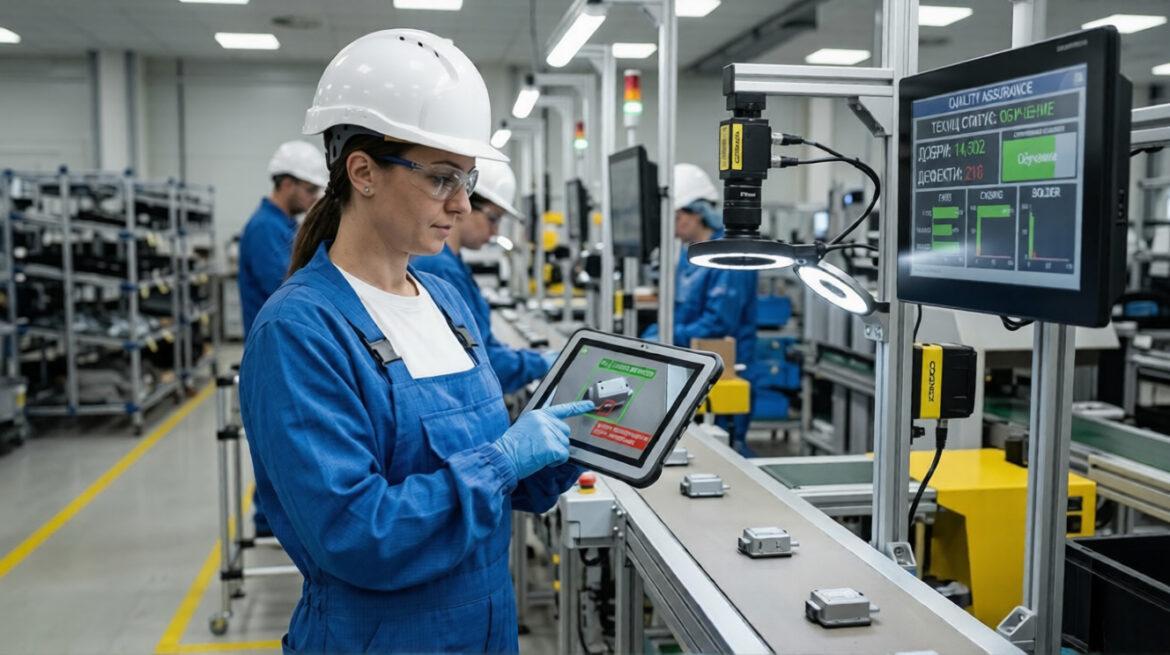
As manufacturing becomes faster, more automated, and increasingly complex, maintaining consistent product quality has become one of the industry's biggest challenges. Production lines today handle hundreds or even thousands of components every hour, leaving very little room for manual inspection to keep pace. While traditional assembly inspection has served manufacturers for decades, it is now struggling to meet the demands of modern production environments.
The challenge isn't simply about inspecting more products-it's about inspecting every product accurately, consistently, and in real time. A single missed assembly defect can lead to warranty claims, product recalls, customer dissatisfaction, or costly production rework.
This is where Vision AI-powered assembly inspection is changing the game. By combining computer vision, industrial AI, and real-time analytics, manufacturers can verify every assembled product automatically, detect defects instantly, and maintain high quality without slowing down production.
Why Traditional Assembly Inspection Struggles at Scale
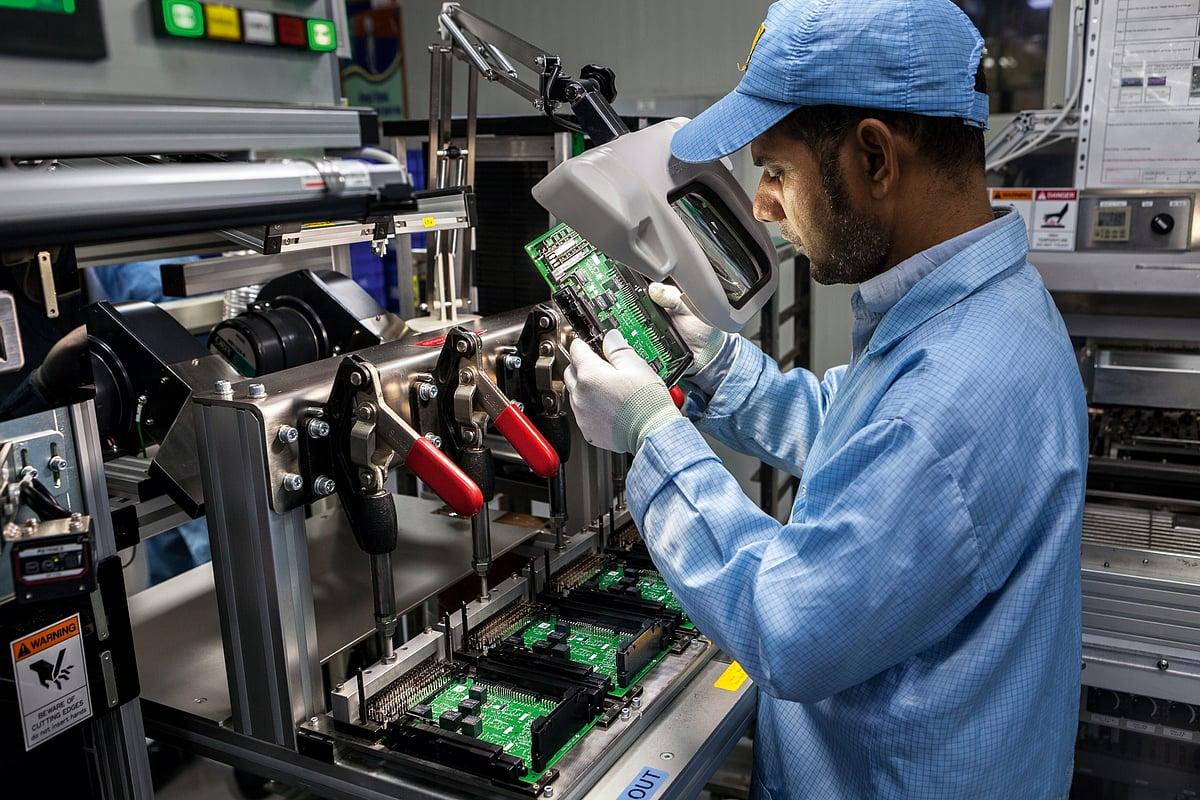
Manual inspection relies heavily on human operators to verify that every component has been assembled correctly. While experienced inspectors are highly skilled, human inspection has natural limitations that become increasingly visible as production volumes grow.
Fatigue is one of the biggest challenges. After inspecting hundreds or thousands of similar products during a shift, even the most experienced operators may overlook missing screws, incorrect part orientation, misplaced labels, or incomplete assemblies.
Consistency is another concern. Two inspectors may evaluate the same product differently, particularly when defects are subtle or inspection standards are open to interpretation. This variation creates inconsistent quality across shifts, production lines, or manufacturing plants.
Speed is equally important. Modern production lines often move faster than manual inspection can reliably support. As throughput increases, inspectors have less time to evaluate each product, increasing the likelihood of defects escaping into the market.
These limitations aren't a reflection of workforce capability-they are simply the result of asking people to perform highly repetitive visual tasks under demanding production conditions.
The Hidden Costs of Missed Assembly Defects
Many manufacturers focus on the direct cost of defective products, but the indirect costs are often much higher.
When an assembly error reaches the customer, the consequences extend beyond replacing a faulty product. Manufacturers may face warranty claims, expensive recalls, production downtime, logistics costs, and damage to their brand reputation.
Even defects discovered inside the factory create hidden expenses. Products must be reworked, production schedules are disrupted, and valuable engineering resources are diverted toward investigating recurring quality issues.
The longer an assembly defect goes undetected, the more expensive it becomes to fix. Identifying errors immediately after assembly dramatically reduces these costs.
Why Traditional Automation Isn't Enough
Some manufacturers have introduced sensors, fixtures, or rule-based machine vision systems to improve inspection. While these technologies help in specific applications, they often struggle when production environments become more dynamic.
Traditional systems usually require precise lighting conditions, fixed product positioning, and predefined inspection rules. Introducing a new product variant or changing component designs frequently requires extensive reprogramming.
Modern manufacturing demands greater flexibility. Production lines often handle multiple product models, frequent engineering changes, and varying assembly configurations.
This is where AI-powered inspection provides a significant advantage.
How AI Assembly Inspection Solves These Challenges
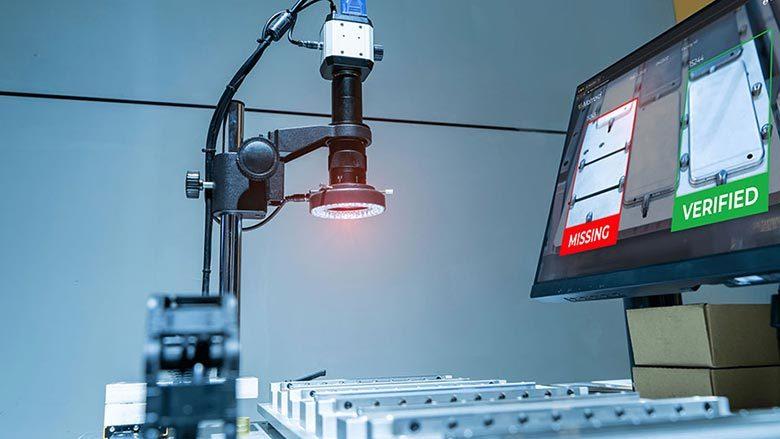
AI assembly inspection uses computer vision to analyze images of assembled products in real time - Watch Demo. Instead of relying solely on fixed rules, AI models learn to identify correct assemblies and defects from production images. With Orama's No-Code Industrial AI Platform, manufacturers can build, deploy, and continuously improve assembly verification applications without developing custom AI models from scratch.
The result is a system capable of inspecting every product with consistent accuracy throughout every production shift.
AI can detect:
Missing components
Incorrect part orientation
Loose or absent fasteners
Improper cable routing
Missing labels
Wrong component placement
Incomplete assemblies
Cosmetic defects affecting assembly quality
Unlike manual inspection, AI does not become fatigued, distracted, or inconsistent. Every product is evaluated using the same inspection criteria.
As production volumes increase, AI inspection scales effortlessly without compromising inspection quality.
Know more about assembly verification in detail
Real-Time Inspection Means Faster Decisions
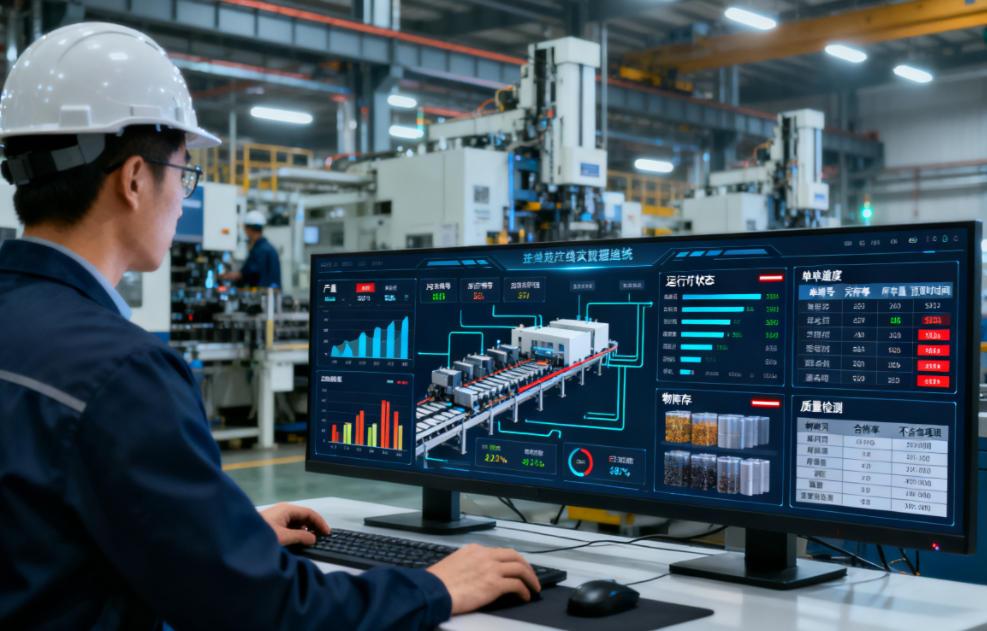
One of the biggest advantages of AI is its ability to provide immediate feedback.
Instead of discovering assembly issues during final quality checks or after shipment, manufacturers receive instant alerts when defects occur.
This enables operators to correct problems before additional defective products are produced. Engineering teams can identify recurring defect patterns, while production managers gain visibility into quality trends across shifts and production lines.
Real-time inspection transforms quality control from a reactive process into a proactive one.
Beyond detecting defects, inspection data helps manufacturers understand recurring quality issues, monitor production trends, and identify process improvements. Instead of simply finding problems, manufacturers can continuously improve assembly operations using actionable production insights.
AI Learns Alongside Your Production
Modern manufacturing rarely stays the same for long. New product variants, design updates, and process improvements are introduced regularly.
Unlike traditional rule-based inspection systems, AI models can be retrained using new production data. This allows manufacturers to adapt inspection processes without rebuilding entire inspection programs.
As more inspection data becomes available, AI systems continue improving their ability to identify subtle defects while reducing false positives.
This adaptability makes AI particularly valuable for manufacturers producing multiple product variants or operating high-mix, low-volume production lines.
Choosing the Right AI Assembly Verification Partner
Not all AI inspection solutions are created equally. Manufacturers should look for solutions that integrate with existing PLCs, industrial cameras, MES, ERP, and production workflows. The platform should support multiple product variants, scale across production lines, and allow quality teams to update inspection logic without extensive software development.
A successful AI assembly verification solution should do more than identify defects-it should help manufacturers continuously improve production quality, reduce rework, and make better operational decisions.
At Orama Solutions, Assembly Verification is powered by our Vision AI application and built on our No-Code Industrial AI Platform. Manufacturers can automate component verification, detect assembly defects, monitor inspection results, and continuously improve quality from a single industrial AI platform. The solution integrates with existing production environments, enabling manufacturers to deploy AI inspection faster while scaling across multiple lines and product variants.
Whether you're scaling an existing production line or introducing new product variants, AI-powered assembly verification provides the accuracy and flexibility required for modern manufacturing.
The Future of Assembly Inspection
Manufacturing is moving toward smarter factories where every process is connected, monitored, and continuously optimized. Assembly inspection is no exception.
Traditional inspection methods simply cannot keep pace with increasing production complexity and customer quality expectations. AI assembly inspection enables manufacturers to inspect every product, reduce costly defects, improve traceability, and maintain consistent quality at scale.
As Industry 4.0 continues to evolve, As manufacturers continue their Industry 4.0 journey, assembly verification will evolve from a standalone inspection process into part of a connected manufacturing ecosystem-where Vision AI, Smart Shopfloor, Digital Forms, and production analytics work together to improve quality, productivity, and traceability.
If you're looking to reduce assembly defects, improve inspection accuracy, and automate quality control, explore Orama Solutions' Assembly Verification platform to see how AI can transform your production line.
Ready to automate assembly inspection? Discover how Orama's AI-powered Assembly Verification solution helps manufacturers detect defects in real time, improve quality consistency, and scale inspection without increasing manual effort.