



Upcoming Events: Auto Vision Summit 2026 | Smart Factory Expo 2026 | Live Demos Available

Visual Classification And Counting

Visual Classification, Counting, and Measurement AI

Sort products by type or grade, count items accurately, and support dimensional decisions with computer vision.

This application is built for manufacturers searching for image classification in production, automated counting systems, or AI-based quality sorting that can distinguish product types, grades, and countable features with high consistency.

Explore No-Code Platform
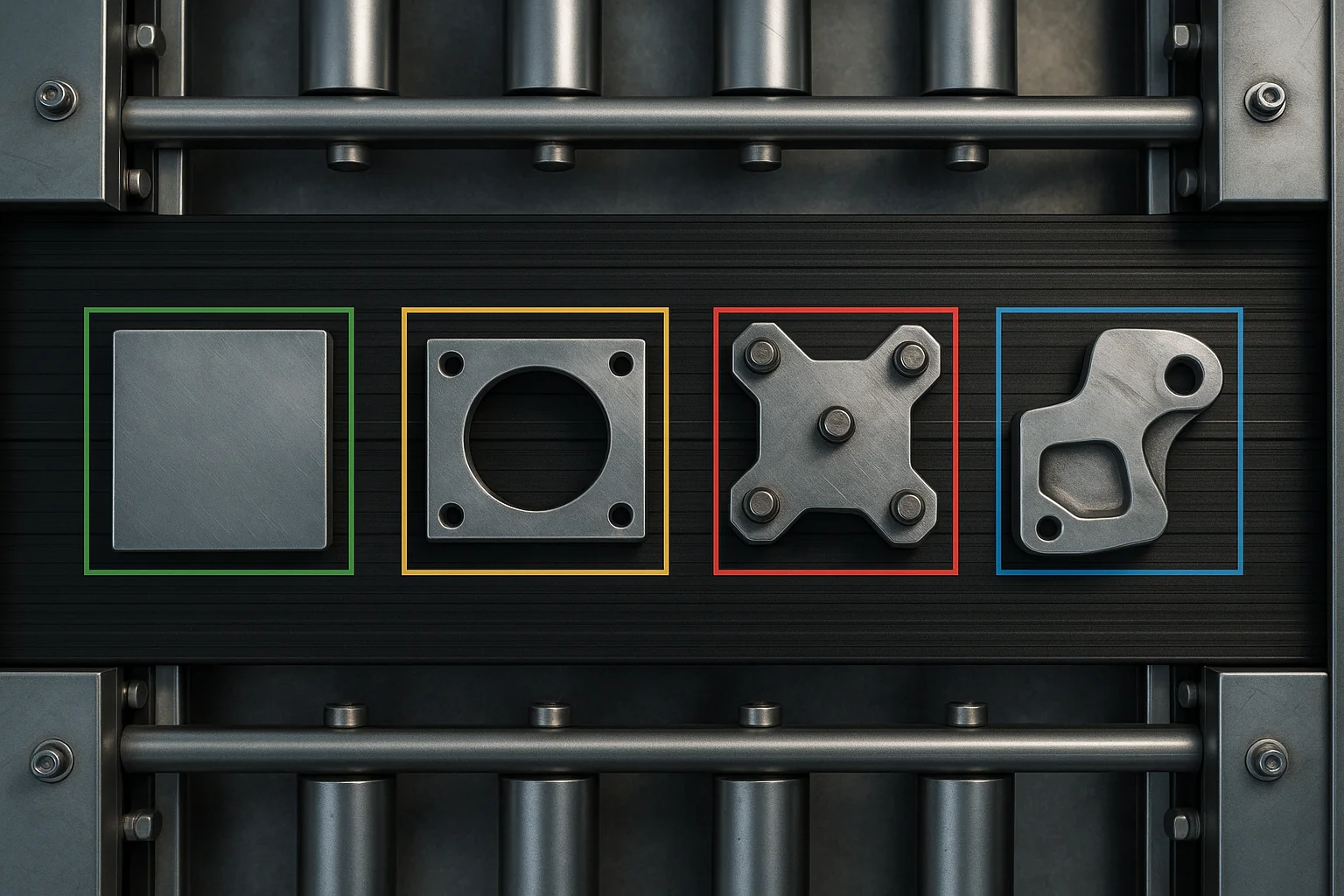
Visual classification and counting application in manufacturing

Built For Production

Tuned for real line conditions, traceability requirements, and fast operator decisions.

Search Intent

Visual Classification And Counting

System Compatibility

Built for real manufacturing conditions

Designed for production lines where vision has to fit into existing cameras, PLCs, controllers, and factory automation standards without forcing a complete hardware reset.

System Compatibility

Connect with GenICam-compliant industrial cameras

Built to work with common machine vision camera ecosystems used across inspection and automation deployments.

BaslerBasler
Allied VisionAllied Vision
BaumerBaumer
HikvisionHikvision

99%+

Sorting accuracy on stable trained classes

Real-time

Classification and counting decisions

Multi-class

Support for variants and grades

Scalable

Easy rollout across multiple lines

Production Challenge

Why teams search for this solution

Teams usually reach this application when operators are manually sorting parts, counting items in trays, or checking product variants under time pressure. Small counting mistakes or wrong-grade shipments can create inventory problems, rework, and customer dissatisfaction very quickly.

Solution Approach

How Orama deploys the application

Orama combines classification models, detection-based counting, and configurable decision logic so the same application can identify what the product is, how many objects are present, and whether the observed condition matches the expected production rule.

Typical Project Flow

  • Imaging setup and data capture review
  • Model tuning around line variation
  • Pass or fail logic and deployment

Capabilities

What This Application Does

  • Classify products by type, grade, finish, variant, or visual quality band.
  • Count repeated objects, components, cavities, packs, or grouped items in a reliable field of view.
  • Support go or no-go decisions using classification confidence, counting thresholds, or measurement rules.
  • Enable retraining as new product variants, defect classes, or packaging formats are introduced.

Deployment Workflow

How Deployment Works

  • Collect representative images for each class, grade, or counting condition across normal production variation.
  • Define decision logic such as exact counts, count ranges, variant labels, or grade boundaries.
  • Train and validate the model using real line images, including edge cases and confusing look-alike samples.
  • Deploy to the line and monitor model performance as product mix, lighting, or background conditions evolve.

Use Cases

Common Production Use Cases

  • Product grading and sorting by cosmetic quality, color, shape, or finish condition.
  • Tray, carton, and packaging counts for kits, multipacks, and assembled sets.
  • Variant identification for mixed production where wrong-part sorting is a recurring issue.
  • Feature counting and simple measurement support for holes, inserts, pills, bottles, or cavities.

Business Outcomes

Operational Outcomes

  • More accurate sorting and fewer downstream errors caused by wrong variant dispatch.
  • Reduced manual counting effort on repetitive, high-throughput stations.
  • Cleaner production data for inventory, batch reconciliation, and quality reporting.
  • A flexible vision workflow that can expand from one class or count rule to many.

Frequently Asked Questions

Questions buyers usually ask before deployment

Can one system handle both classification and counting?

Yes. We often combine these functions in the same workflow, for example to identify a product variant first and then verify whether the expected number of components or items is present.

Is this suitable for counting overlapping objects?

It can be, but overlapping objects require the right imaging strategy and sometimes instance-level detection rather than simple classification. We evaluate the scene first to choose the right approach.

Can the model be retrained when new variants are introduced?

Yes. That is one of the main advantages of using an AI vision workflow instead of static hard-coded inspection logic. New variants and edge cases can be added through additional training cycles.

Does this replace precision metrology?

For strict tolerance measurement, dedicated metrology hardware may still be required. Vision classification and counting are strongest when the business need is fast operational decision-making rather than laboratory-grade measurement.

Next Step

Need a tailored application page for your exact inspection problem?

We can adapt the same platform for your product geometry, lighting, line speed, traceability rules, and reporting needs without forcing your team into a generic workflow.

View All Applications

Project Fit

  • Single station pilots or full multi-line rollouts
  • Camera, PLC, and edge hardware aligned to your plant setup
  • Traceability, dashboards, and pass or fail logic tailored to the line